
Home » India’s Data Centre Decade » Page 2
Dear Reader,
Every conversation about artificial intelligence eventually leads to a question people rarely ask out loud: where does all this actually happen? Behind every chatbot reply sits a warehouse full of computers, drawing enormous amounts of electricity and, as we shall see, water, somewhere in the physical world. A growing number of those warehouses are being built in India.
Data centres sit at an unusual intersection for our readers. They are, at once, a real estate asset, a power infrastructure asset, and an AI infrastructure asset, and they are increasingly financeable through the same regulated vehicles, AIFs and InvITs, that family offices already use for roads, transmission lines and renewable energy. The scale of capital now committed to this sector by global hyperscalers and domestic operators alike suggests this is no longer a niche allocation.
This issue steps back from the balance sheets and asks the simpler questions many of our readers have raised: why is this boom happening now, why is India in such a strong position to benefit, what is the government doing about it, and what does it cost the ordinary people who live near these facilities?
As always, this issue is intended to inform your due diligence, not to substitute for it. Data centre economics are attractive, but they are also power-constrained, capital-intensive, and increasingly competitive. We hope the analysis below is useful.
We have kept the investment detail intact for those who want it, but told the story in plain language throughout, because understanding an opportunity properly means understanding its downside too. Every acronym used in this issue is spelt out in full in the glossary at the end.
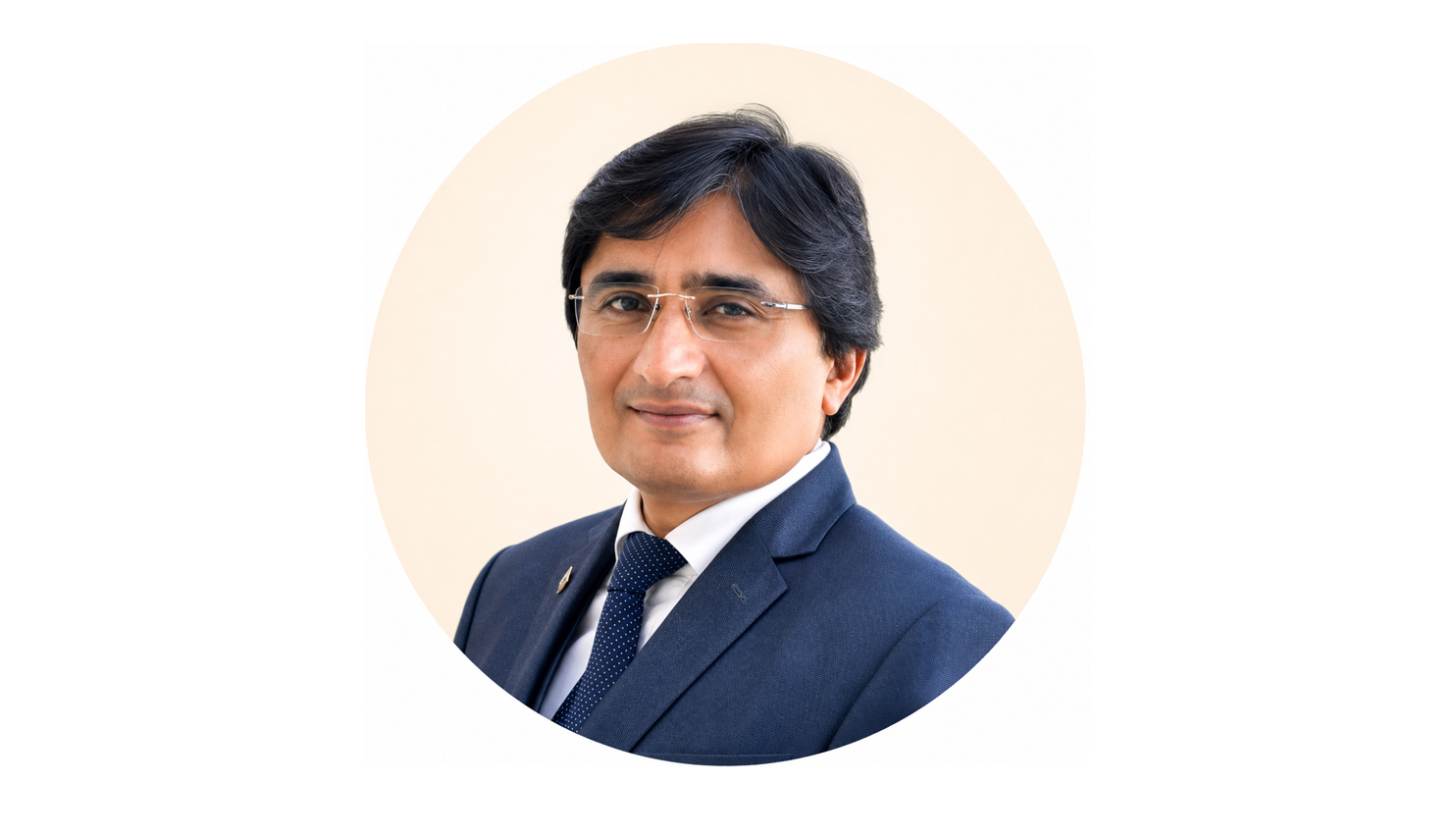
Chairman and Founder
Artificial intelligence, or AI, needs enormous quantities of three things: computing power, electricity, and water for cooling. Every time someone uses a tool like ChatGPT or an AI-powered search feature, that request travels to a data centre, a building full of servers that store and process information, gets answered, and travels back. As AI use has grown worldwide, so has the need for these buildings. Global technology giants, often called hyperscalers because they build computing capacity at a massive global scale, are now spending hundreds of billions of dollars a year on them. This is the AI boom in its most physical, unglamorous form: land, concrete, cables and power lines, rather than software alone. Combined capital spending by the largest hyperscalers is expected to reach up to USD 630 billion in 2026, around 62% higher than the previous year.
Several things have lined up for India at once: a large, young, English-speaking workforce that global technology companies already trust; a fast-growing digital economy with a huge base of internet and smartphone users creating genuine domestic demand, not merely capacity built for export; land, construction and skilled talent that cost meaningfully less than in the United States, Europe or Singapore; data localisation rules under the DPDP Act (Digital Personal Data Protection Act, 2023), which increasingly require data generated in India to be stored in India; and a rapidly growing supply of renewable power. India added a record 44.5 GW (gigawatts, a unit of power equal to 1,000 MW, or megawatts) of renewable energy capacity in 2025, nearly double the previous year, giving operators cleaner power for increasingly energy-hungry AI facilities.
The result is that global hyperscalers have moved from testing the Indian market to committing to it outright. Google has pledged USD 15 billion over five years, covering subsea cables, data centres, cloud capacity and AI skilling. Amazon has raised its total India investment commitment to USD 48 billion by 2030, including fresh AI and cloud infrastructure. Canada Pension Plan Investment Board has separately committed up to ₹7,000 crore to CtrlS Datacenters, an Indian operator, to expand hyperscale capacity. Taken together, cumulative investment commitments into India’s data centre sector reached an estimated USD 126 billion by the end of 2025, according to CBRE Group research, and are projected to rise by around 45% in 2026, potentially crossing USD 180 billion.
India’s operational data centre capacity, measured in MW, crossed 1,700 MW by the end of 2025 according to CBRE, and is projected to grow around 30% further in 2026. A separate estimate from JLL, another global real estate research firm, using a slightly different measure of capacity, put India’s total at 1,123 MW as of mid-2025, growing 48% year-on-year, with occupancy so tight that vacancy sat at just 4.3%.
The Indian government has taken a deliberately generous approach, treating data centres as national infrastructure rather than ordinary commercial property.
The Draft National Data Centre Policy 2025 proposes up to 20 years of conditional tax exemptions, a full waiver of electricity duty (a state-level tax on power consumption that would otherwise add meaningfully to running costs), input tax credits on cooling and electrical equipment, faster single-window regulatory approvals, and dedicated Data Centre Economic Zones with land pre-allocated near existing technology corridors. GST (Goods and Services Tax) policy has also been used as a lever: data centres sourcing at least 75% of their power from renewable sources can qualify for a reduced 12% GST rate on construction materials, instead of the standard 18%, a saving that can run into tens of crores of rupees on a large facility.
States are competing hard for the same investment. Maharashtra grants deemed industry status, unlocking industrial power tariffs and faster approvals. Gujarat exempts data centres from electricity duty entirely if they reach 100% renewable power within three years. Telangana offers subsidised land to operators who commit to water neutrality, returning as much water to the local system as they draw from it through recycling and rainwater harvesting.
For hyperscalers and developers, the incentives above translate into two decades of tax relief, cheaper power, faster clearances than in most developed markets, and a large domestic customer base that justifies building capacity even without export demand.
For financial investors, including family offices, the opportunity is increasingly channelled through two SEBI-regulated (Securities and Exchange Board of India) vehicles. AIFs (Alternative Investment Funds), typically Category II infrastructure funds, are the usual route for earlier, riskier exposure, as they fund land purchase, construction, and power tie-ups before a facility earns income. InvITs (Infrastructure Investment Trusts), regulated under the SEBI (Infrastructure Investment Trusts) Regulations, 2014, are the natural home for completed, income-generating assets, and must pay out at least 90% of their NDCF (net distributable cash flow, the surplus left after running costs and debt payments) to investors, a structure that suits the long, contracted leases hyperscalers typically sign.
No dedicated, pure-play data centre InvIT has been listed in India yet. The digital infrastructure InvITs that exist today, such as Bharti’s Nxt-Infra Trust and the Brookfield-backed Data Infrastructure Trust, currently hold telecom towers and fibre networks rather than data centres themselves. However, several large private operators have signalled their intent to list dedicated vehicles as their portfolios mature.
This is the part of the story that gets far less attention, and it deserves equal weight.
Data centres are extremely thirsty. Servers generate enormous heat and must be cooled continuously, and the cheapest, most common cooling methods use large volumes of water. A single 100 MW data centre, a mid-sized facility by today’s standards, can require around 2 million litres of water a day, roughly equivalent to the daily needs of 6,500 households. Independent mapping by WRI India has found that more than half of India’s data centres sit in regions that are already water-stressed.
The evidence is visible on the ground. Near Greater Noida, residents living close to a large data centre report that groundwater once available at 20 to 30 feet must now be drawn from at least 80 feet down. Similar concerns have surfaced in Bengaluru. Independent reviews of sustainability disclosures from operators such as AdaniConneX, Sify, Nxtra and CtrlS have found real gaps in transparency: water usage figures are inconsistently reported, rarely independently verified, and claims of being “water-neutral” often do not specify whether recycled water is genuinely used for cooling or only for landscaping and sanitation.
There is a parallel concern around heat and power. Research from the Council on Energy, Environment and Water (CEEW) has found that 57% of Indian districts already face high to very high risk from extreme heat, and many major data centre hubs sit within them, which raises cooling loads further, just as the facilities themselves are adding continuous, round-the-clock demand to local power grids.
None of this makes the investment case invalid. It does mean that the data centres likely to prove durable long-term assets are the ones built with genuine water recycling, closed-loop cooling that reuses water rather than consuming it, and honest, independently verified sustainability disclosures, not simply the ones built fastest.
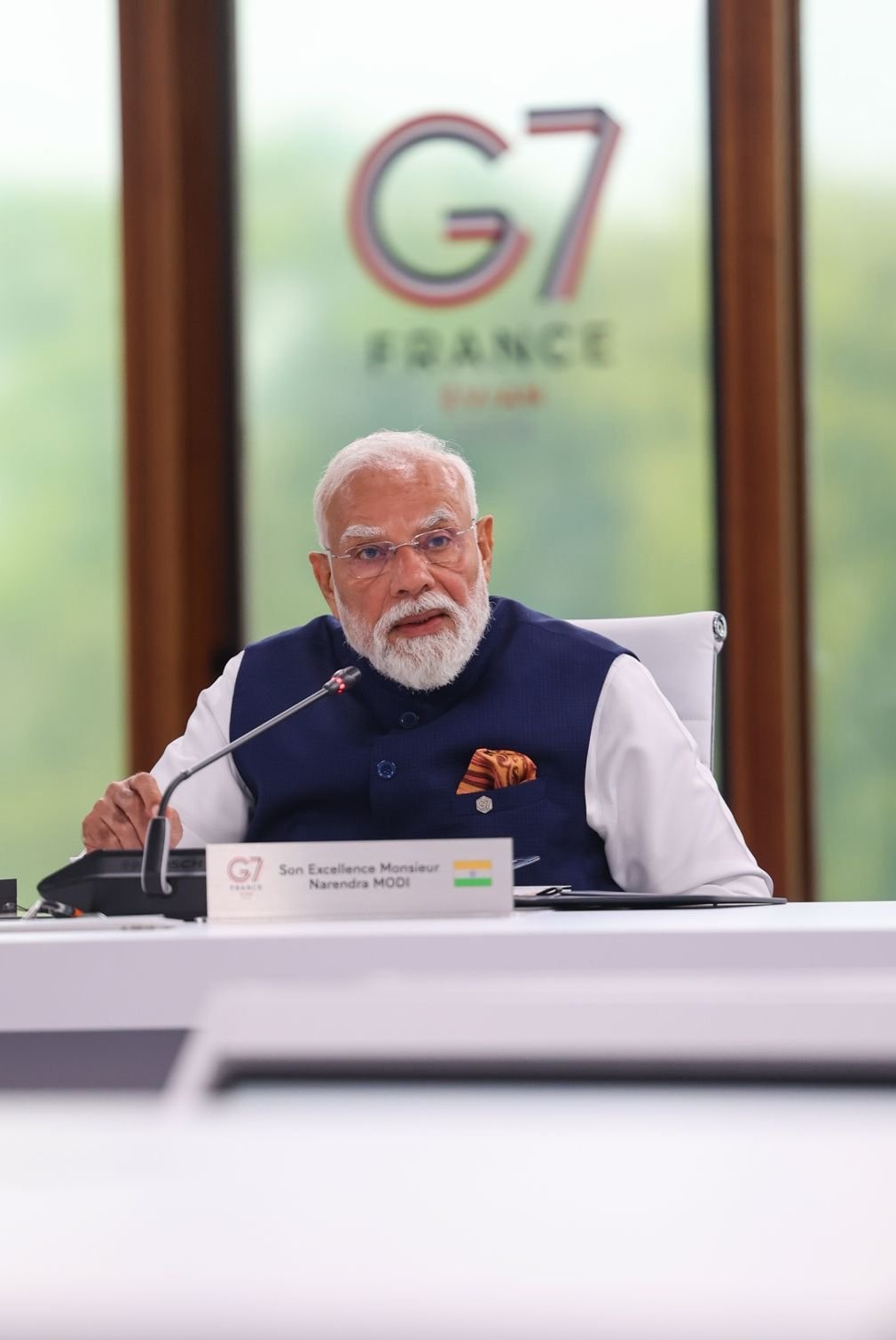
Prime Minister Narendra Modi attended the G7 Summit in Évian-les-Bains, France, in June 2026, India’s thirteenth participation and his seventh consecutive appearance. No treaty specific to data centres or AI infrastructure was signed at the summit itself, but several of his engagements matter for the broader climate this newsletter is tracking.
At an outreach session on inclusive growth, Modi proposed IMPACT (International Mobilisation Partnership for Accelerating Connectivity and Trade), combining G7 capital, Indian talent and Global South ownership to build connectivity and trade corridors, modelled on the earlier India-Middle East-Europe Economic Corridor (IMEC). He also proposed a Global Skills Partnership focused on the mobility of skilled workers, directly relevant to the technology workforce that this sector depends on.
In bilateral talks with US President Donald Trump, the two leaders reviewed progress under the U.S.-India COMPACT (Catalysing Opportunities for Military Partnership, Accelerated Commerce & Technology), a framework launched in February 2025 that includes TRUST (Transforming the Relationship Utilising Strategic Technology), a dedicated pillar covering semiconductors, AI and quantum computing, alongside progress towards an interim bilateral trade agreement. With European Commission leadership, both sides welcomed the conclusion of negotiations for the India-EU FTA (Free Trade Agreement), expected to be signed by the end of 2026. With UK Prime Minister Keir Starmer, Modi reviewed progress on the India-UK CETA (Comprehensive Economic and Trade Agreement) and the wider Vision 2035 partnership, which includes technology cooperation.
None of these are data centre agreement in itself. But trade agreements that reduce friction for cross-border technology investment, and technology partnerships that build trust between India and its largest trading partners, are precisely the kind of diplomatic backdrop that gives hyperscalers confidence to commit tens of billions of dollars to a single country over a decade.
Period | Capacity (MW) | Source |
H1 2025 | 1,123 | JLL |
End-2025 | 1,700 | CBRE |
End-2026 (projected) | 2,200 | CBRE (30% YoY growth) |
End-2027 (projected) | 2,073 | JLL |
Note: figures differ by methodology and reporting cut-off, so both are shown for triangulation rather than reconciliation.
Market | Capacity (MW) |
India | 950 |
Japan | 892 |
Australia | 773 |
Singapore | 718 |
Hong Kong | 613 |
South Korea | 531 |
Source: CBRE South Asia, reported in Business Standard. This is the most recent consolidated regional comparison available and should be read alongside India’s faster, more recent growth shown in Table 1.
Company | Valuation multiple | Notes |
Equinix (EQIX) | 26.6x EV/EBITDA; 29.8x P/FFO | Premium reflects its interconnected customer network and low churn |
Digital Realty (DLR) | 51.5x trailing P/E | Reflects strong revenue growth and hyperscale operating leverage |
No comparable listed pure-play data centre vehicle yet exists in India, which makes a direct multiple comparison difficult. However, India’s lower asset cost base, faster underlying demand growth, and a regulatory framework moving toward formal infrastructure status suggest early Indian platforms could command a reasonable growth premium once a track record of stable, contracted cash flows is established, even before matching the scarcity premiums seen in Equinix and Digital Realty.
Strip away the acronyms, and the story is straightforward. AI has created a genuine, structural need for physical computing capacity on a scale the world has not built before, and that capacity has to sit somewhere. India happens to offer an unusually complete set of ingredients at the same time: a young and skilled workforce, a fast-growing domestic market that needs its own capacity regardless of what happens abroad, land and construction costs well below developed markets, a legal requirement that certain data stay within its borders, a rapidly expanding supply of renewable power, and a government willing to underwrite the build-out with two decades of tax relief. Few countries can offer all six at once, which is precisely why hyperscaler commitments to India have moved from single-digit billions to well over USD 180 billion in the space of barely two years, and why the diplomatic groundwork being laid at forums like the G7, through trade agreements and technology partnerships with India’s largest partners, keeps reinforcing that confidence rather than undermining it.
For family offices, this combination is genuinely rare: a theme with secular demand, government-backed economics, and an emerging pathway to listed, income-generating vehicles once InvITs catch up with the asset base. It is also, in our view, a theme that will reward patience and selectivity over speed. The operators worth backing over a decade-long horizon are unlikely to be the ones that grew fastest in year one; they are more likely to be the ones that solved their water and power problems honestly before the market forced them to. The same is true of the districts and states hosting this growth. Capacity built without a credible plan for where the water comes from, and where it goes, carries a reputational and regulatory risk that a spreadsheet will not show until it is too late. We would encourage readers evaluating individual operators or funds to ask directly about water source, recycling ratios, and independent verification of sustainability claims, not to accept “water-neutral” as a label at face value.
The honest summary is this: India is not simply a beneficiary of the AI boom; it is becoming one of its foundations, but the country’s long-term standing in that role will depend as much on how carefully this growth is managed on the ground as on how much capital it continues to attract from abroad.
| Indices | 01-06-2026 | 30-06-2026 | High | Low |
| BSE S&P SENSEX | 75203.02 | 76478.67 | 77803.18 | 73318.94 |
| NIFTY 50 | 23654.50 | 23865.75 | 24261.60 | 23070.15 |
(INR. In Lakh Crore)
| Particulars | AUM As On 30-04-2026 | Fresh Fund Mobilize During May-2026 | Redemption During May-2026 | AUM As On 31-05-2026 |
| Total AUM of all mutual funds scheme | 82.02 | 12.03 | 12.66 | 81.39 |
| AUM of equity oriented (growth) schemes | 35.91 | 0.58 | 0.35 | 36.14 |
Source: Association of Mutual Fund of India (AMFI)
(INR. In Lakh Crore)
| Month | SIP Contribution | SIP AUM |
| May-2026 | 30,954 | 17,12,126 |
(INR. In Lakh Crore)
| FII / DII | Gross Purchase | Gross Sale | Net |
| FII | 3.40 Lakh | 3.89 Lakh | Selling: 0.49 Lakh |
| DII | 4.23 Lakh | 3.37 Lakh | Buying: 0.86 Lakh |
Acronym | Full Form |
AI | Artificial Intelligence |
MW / GW | Megawatt / Gigawatt (units of power; 1,000 MW = 1 GW) |
CBRE | CBRE Group (a global commercial real estate and research firm) |
JLL | Jones Lang LaSalle (a global commercial real estate and research firm) |
SEBI | Securities and Exchange Board of India |
InvIT | Infrastructure Investment Trust |
AIF | Alternative Investment Fund |
NDCF | Net Distributable Cash Flow |
REIT | Real Estate Investment Trust |
EV/EBITDA | Enterprise Value to Earnings Before Interest, Tax, Depreciation and Amortisation (a valuation multiple) |
FFO | Funds From Operations (a REIT profitability measure) |
P/E | Price to Earnings ratio |
GST | Goods and Services Tax |
DPDP Act | Digital Personal Data Protection Act, 2023 |
WUE | Water Usage Effectiveness |
PUE | Power Usage Effectiveness |
CEEW | Council on Energy, Environment and Water |
WRI | World Resources Institute |
G7 | Group of Seven (a forum of major advanced economies) |
IMPACT | International Mobilisation Partnership for Accelerating Connectivity and Trade |
IMEC | India-Middle East-Europe Economic Corridor |
COMPACT | Catalysing Opportunities for Military Partnership, Accelerated Commerce & Technology (a US-India framework) |
TRUST | Transforming the Relationship Utilising Strategic Technology (the technology pillar of COMPACT) |
FTA | Free Trade Agreement |
CETA | Comprehensive Economic and Trade Agreement |